From Claude Design to Production
How we use Claude Design, Claude Code, and Primate to move from idea to production.
Building software in 2026 feels different from even a few months ago.
At Primate, AI has changed almost every part of our product development process, especially design exploration and frontend iteration. A recent redesign of our landing page is a good example.
The redesign started with a feeling
Most product changes begin when we notice friction:
- A workflow takes too many clicks.
- A page feels visually cluttered.
- A feature is useful, but its value is not obvious.
- The product works, but the experience does not feel as sharp as it should.
That last point was the issue with our landing page. The page was functional, but it did not have a strong enough visual identity for the product we are building.
A prototype you can actually use
Once the problem is clear, I use Claude Design to explore directions as working prototypes instead of spending hours on static screens in Figma.
That shift matters. A working prototype can be judged in the browser, with real spacing, interaction, scrolling, and responsive behavior. It is much easier to evaluate a design when it can be experienced instead of imagined.
By the time an idea reaches engineering review, it has usually gone through several rounds:
- Rough direction and layout exploration.
- Visual identity and interaction refinement.
- Responsive behavior checks.
- A final pass on whether the page actually communicates the product.
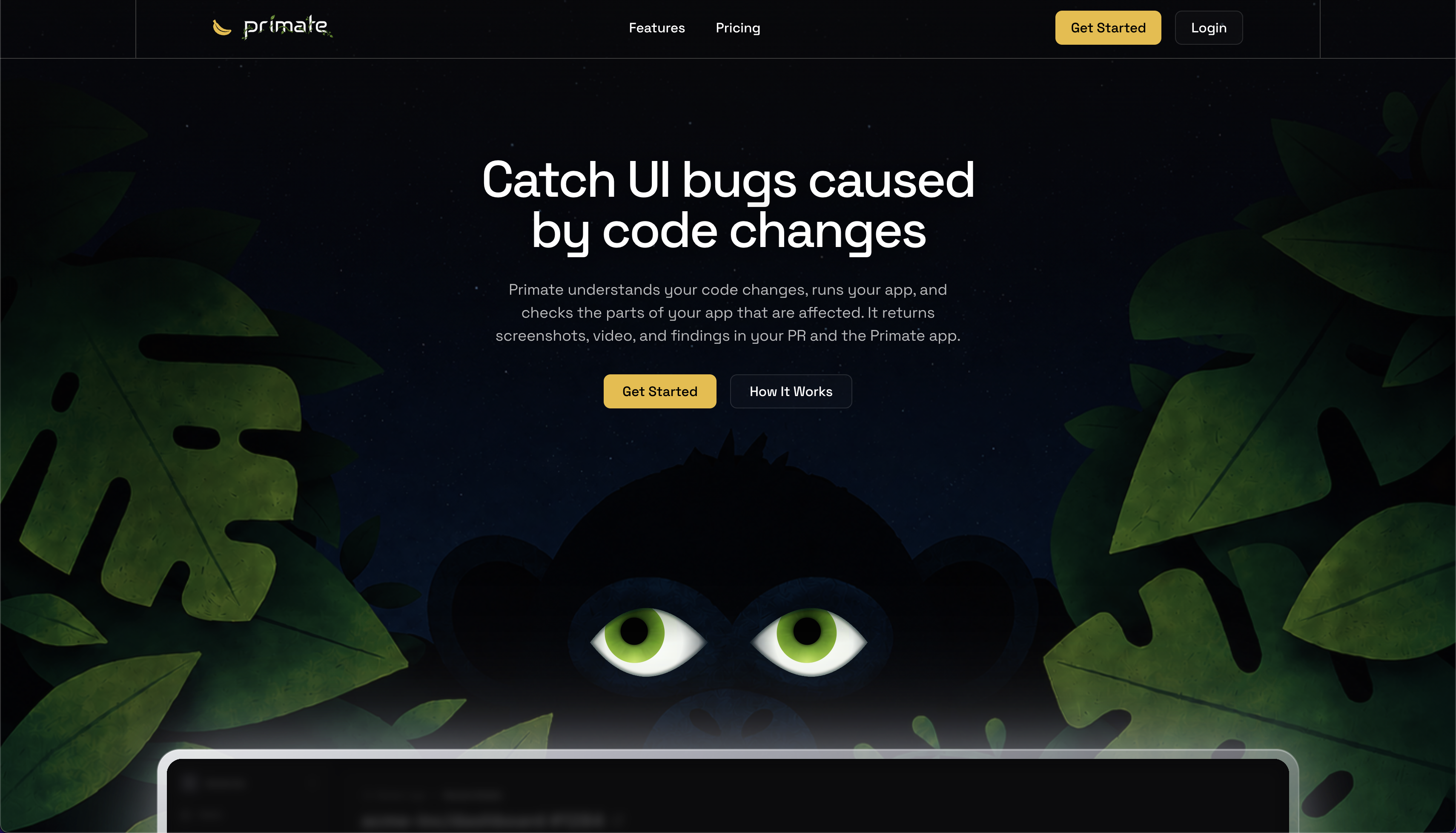
After several rounds of exploration, we landed on a direction that felt much more aligned with the product and the brand.
From prototype to pull request
Once a prototype is in a good place, the workflow depends on the type of change.
For product code, our developers review the implementation, clean up generated code where necessary, and make sure the final result meets our production standards. In that case, the prototype acts more like a specification than the final implementation.
For marketing pages, we are generally more aggressive. The cost of a bug is lower, so I often make changes directly with Claude Code and submit the pull request myself. The ability to work directly with the code as a designer has significantly shortened the feedback loop between idea and deployment.
That usually means:
- Claude Design helps explore and validate the direction.
- Claude Code helps move the chosen direction into the actual codebase.
- A pull request gives the team a concrete change to review.
- Primate helps validate that the change behaves correctly in the browser.
The faster you ship, the more you need proof
One side effect of prototyping directly in code is that design changes become extremely cheap to explore.
Small refinements that might previously have been deferred can now be tested immediately and reviewed in a pull request.
Here's one example from the landing page redesign. A seemingly simple change standardized button heights across the site. The implementation took minutes to generate, but still needed validation to ensure consistency across breakpoints and layouts.
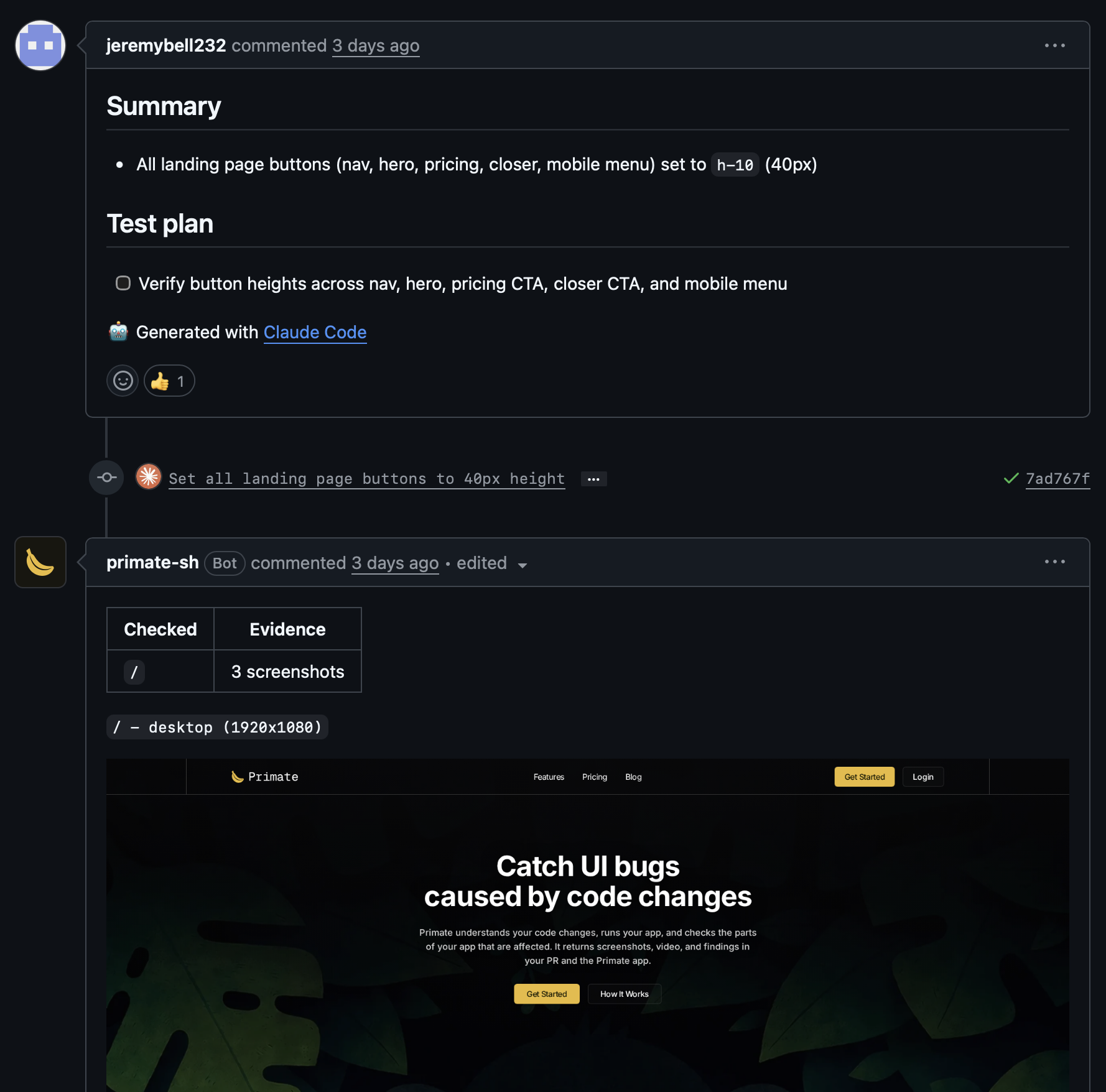
The code change itself was straightforward. Verifying that it behaved correctly across the site was the more important step.
This pattern shows up repeatedly in our workflow. AI dramatically reduces the cost of implementation, which means more ideas reach the pull request stage.
The challenge shifts from creating changes to validating them.
The gap Primate is built to close
That observation was one of the motivations behind Primate. As our own development process accelerated, we needed a way to review changes more efficiently and catch issues before they reached production. Primate reviews pull requests, interacts with applications through a browser, and helps identify issues before they make it through the deployment pipeline.
We do not see AI as a replacement for engineering judgment. If anything, it has made good review processes more important.
The easier it becomes to generate software, the more important it becomes to verify that it works.
That is the balance we are trying to preserve at Primate:
- Move faster from idea to implementation.
- Keep review grounded in real product behavior.
- Use browser evidence instead of vague confidence.
- Catch issues before they reach users.
Most of our development process is now focused on managing that gap while preserving the speed advantages AI provides.